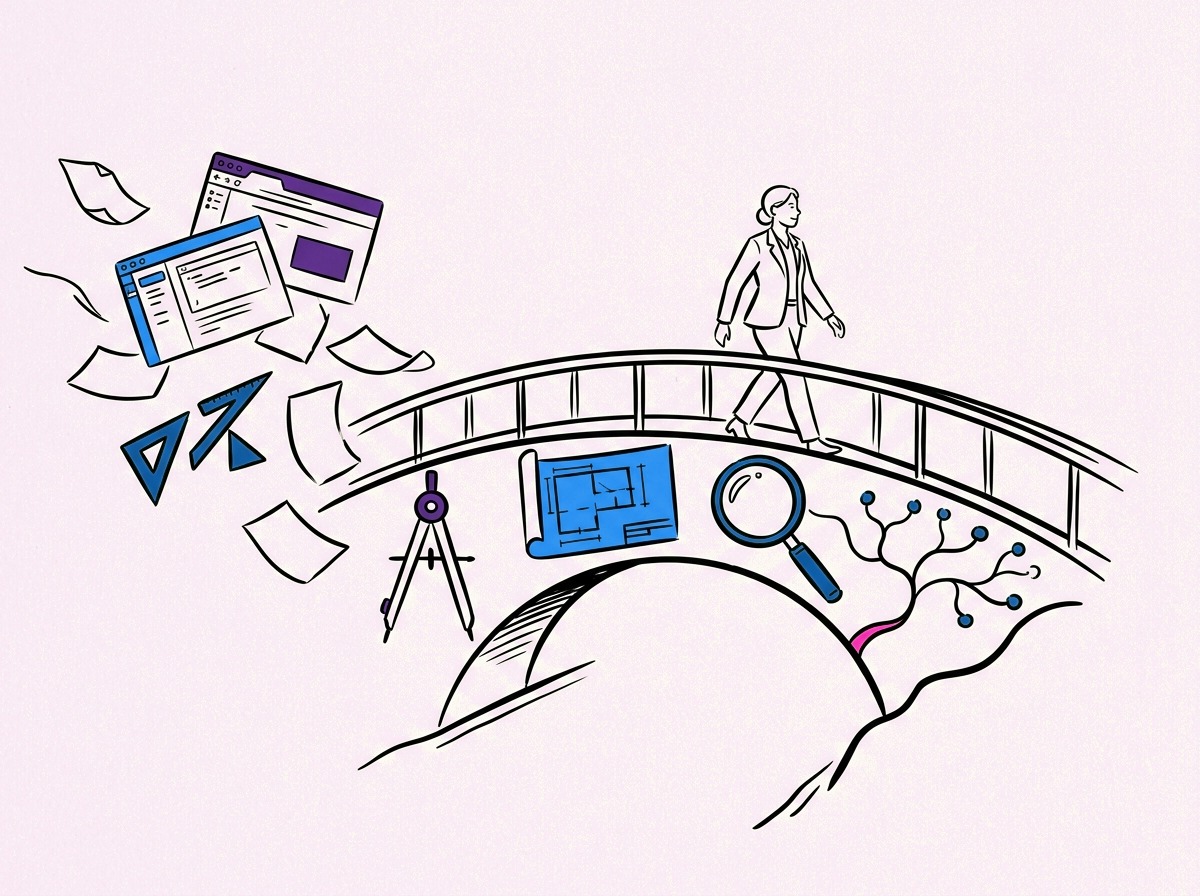
The manifesto turns here. The first three premises establish the mandate, the method, and the capabilities. This premise names what to build.
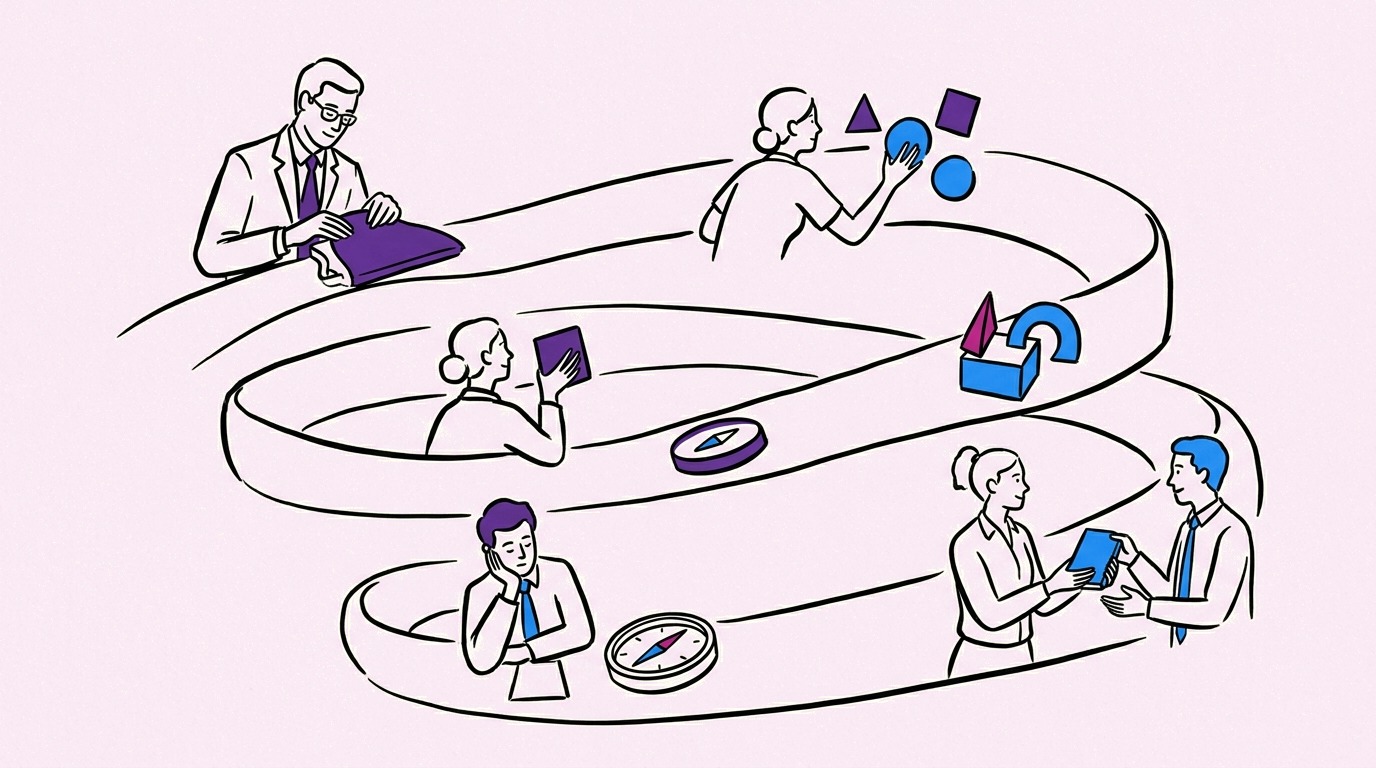
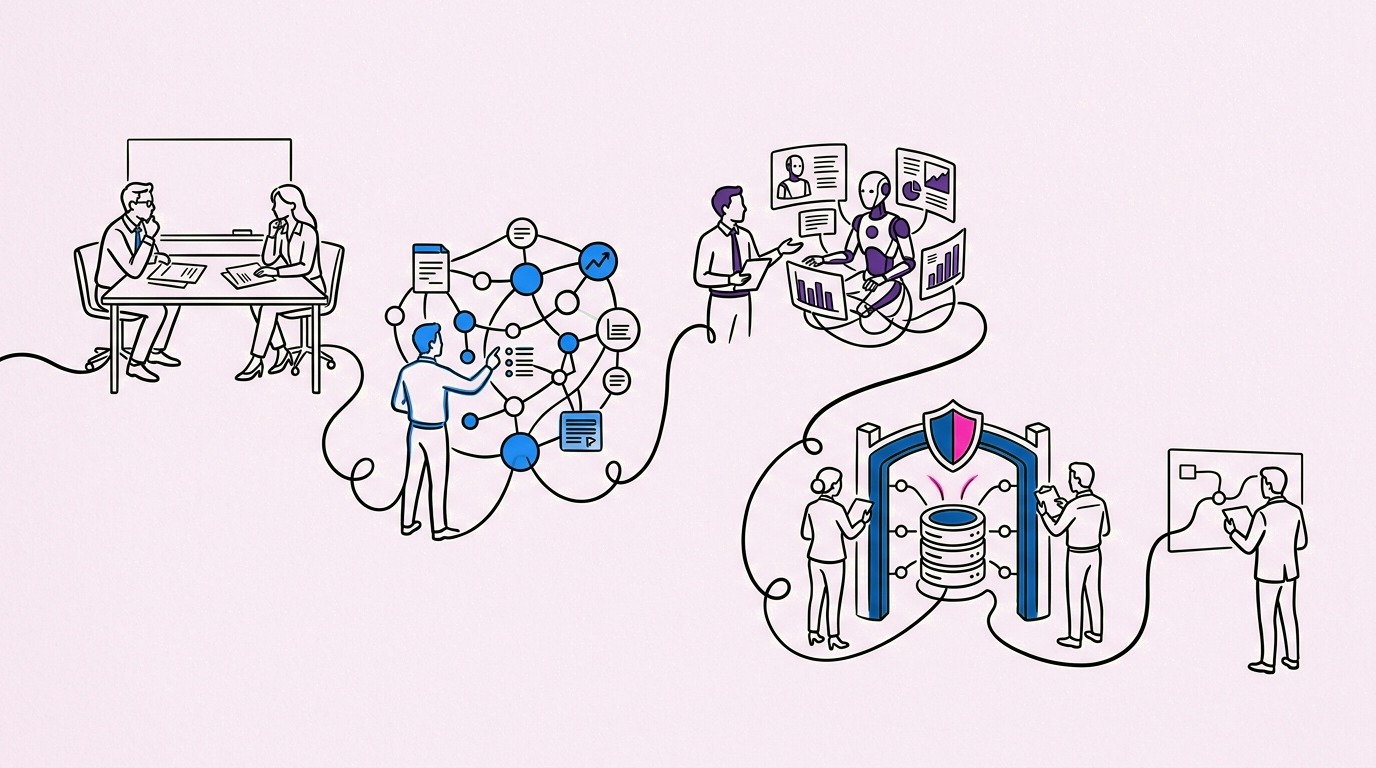
The sequence has four stages. Add AI to work you already do. Redesign the work around AI. Direct agents that carry the work. Build safeguards at the same speed as access. These are not four options. Each stage creates the conditions for the next.
Add AI to the workflow you already have.
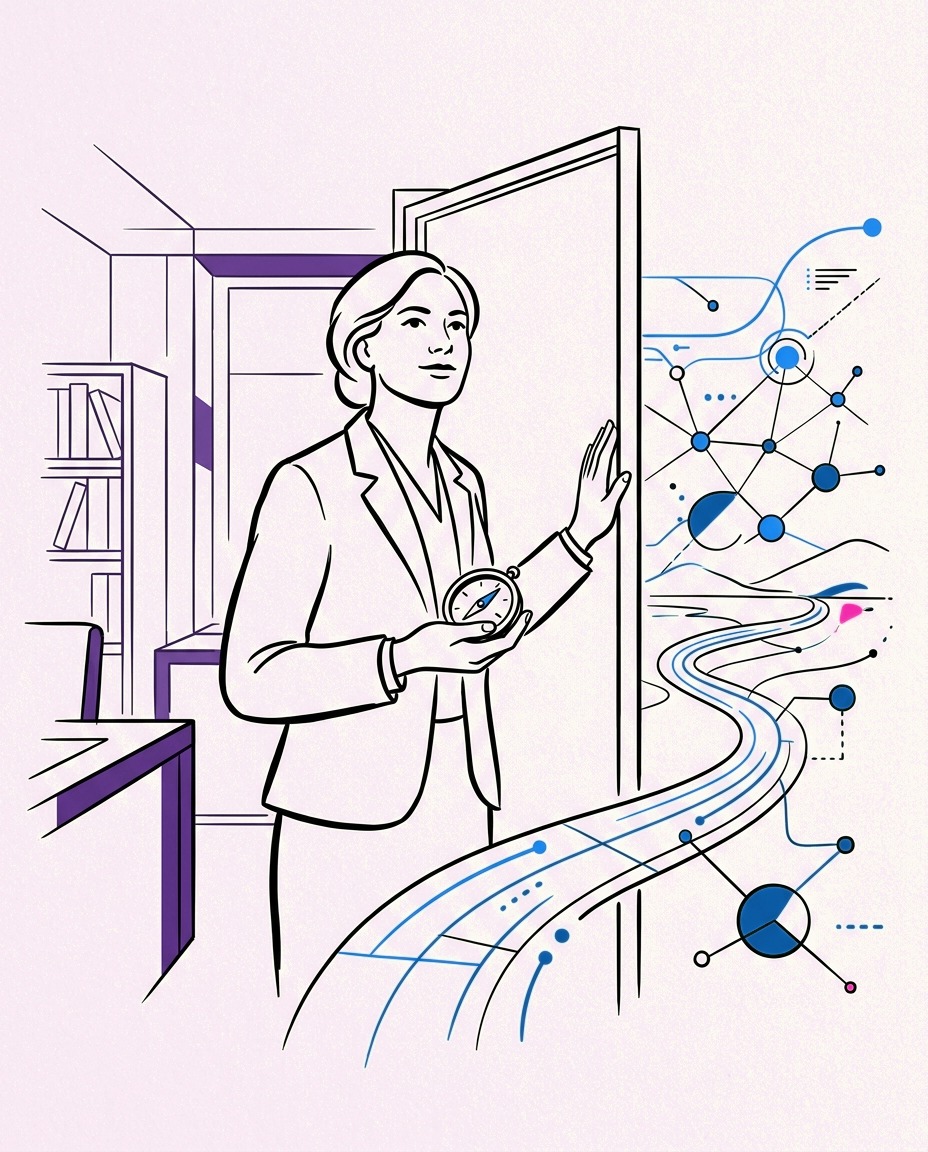
Most daily users still work in answer mode. They ask a question, receive a response, copy part of it into the real work, and move on. That is AI beside the work. The first step toward integration is to place it inside a workflow the professional can describe.
Write down the actual steps of one recurring process. Begin with the trigger. End with the person or system that receives the result. Include the unofficial checks, the handoffs, the waiting, and the corrections that everyone remembers but nobody documented. Then decide where AI can research, draft, compare, classify, or challenge.
Process mapping before automation has a long history in manufacturing. Firms that automated an undocumented process often automated their own dysfunction and made it run faster. The map was never the boring preliminary task. It was the point where hidden work became visible.
A large workplace deployment of an AI assistant illustrates the ceiling of adoption without redesign. Use was widespread and people saved time on email. The composition of the work barely changed. The tool improved one task while the surrounding process remained intact. The gain was real and modest.
This stage is supposed to be modest. The workflow is still initiated and directed by a person throughout. The goal is to learn where AI helps, where it creates review burden, and where a step exists only because the old process required it. The map creates the evidence needed for redesign.
Most professionals have never written down a workflow they own. They know how to perform it and cannot yet articulate all of it. That gap matters because a process cannot be redesigned while it remains tacit. AI exposes the gap by asking for the instructions the professional never had to state.
Stopping here creates a readiness illusion. Frequency rises. Confidence rises. The work remains the same. The professional compares usage with colleagues instead of comparing the impact on what reaches the customer, leader, patient, or next team.
You cannot redesign work you have never written down.
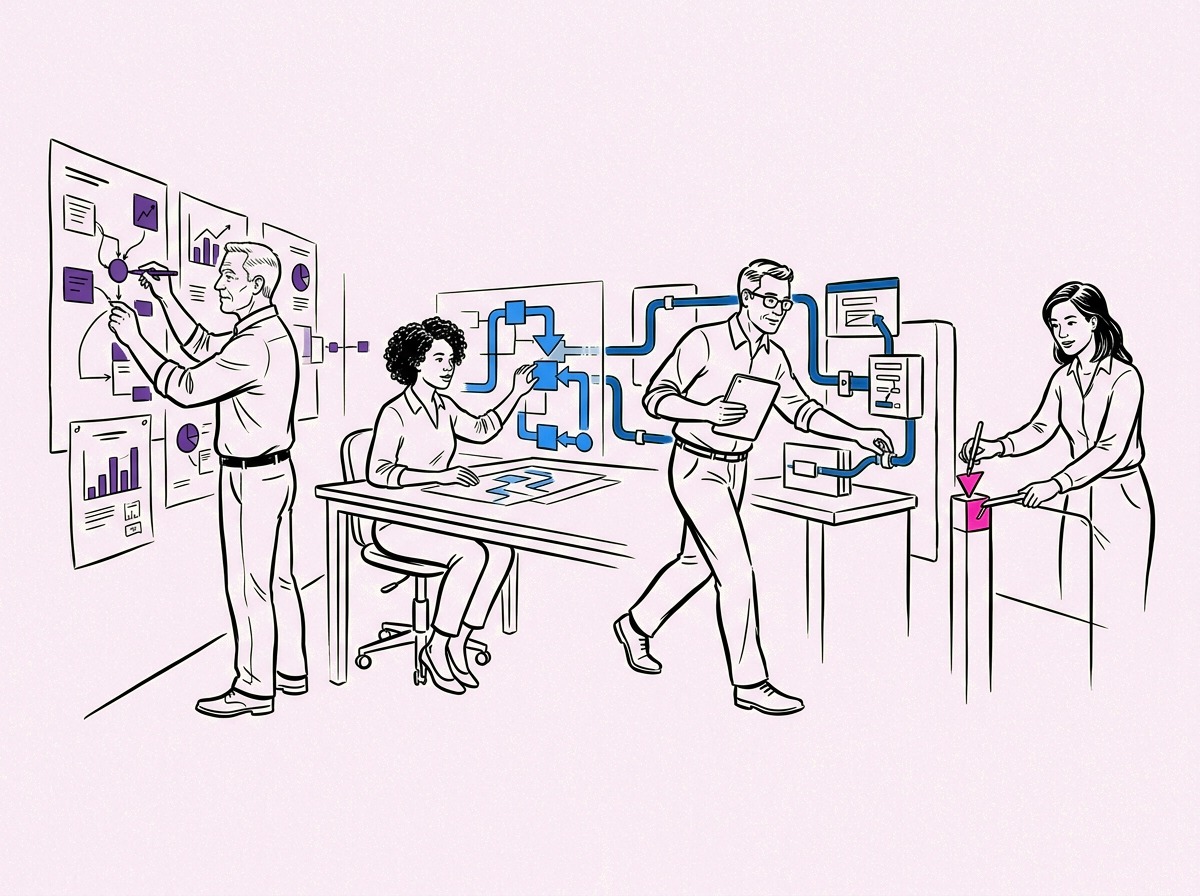
Redesign workflows around AI.
Using AI inside an existing process and rebuilding the process around AI are different acts. The test is binary. If the workflow still runs without AI, it was not redesigned around AI.
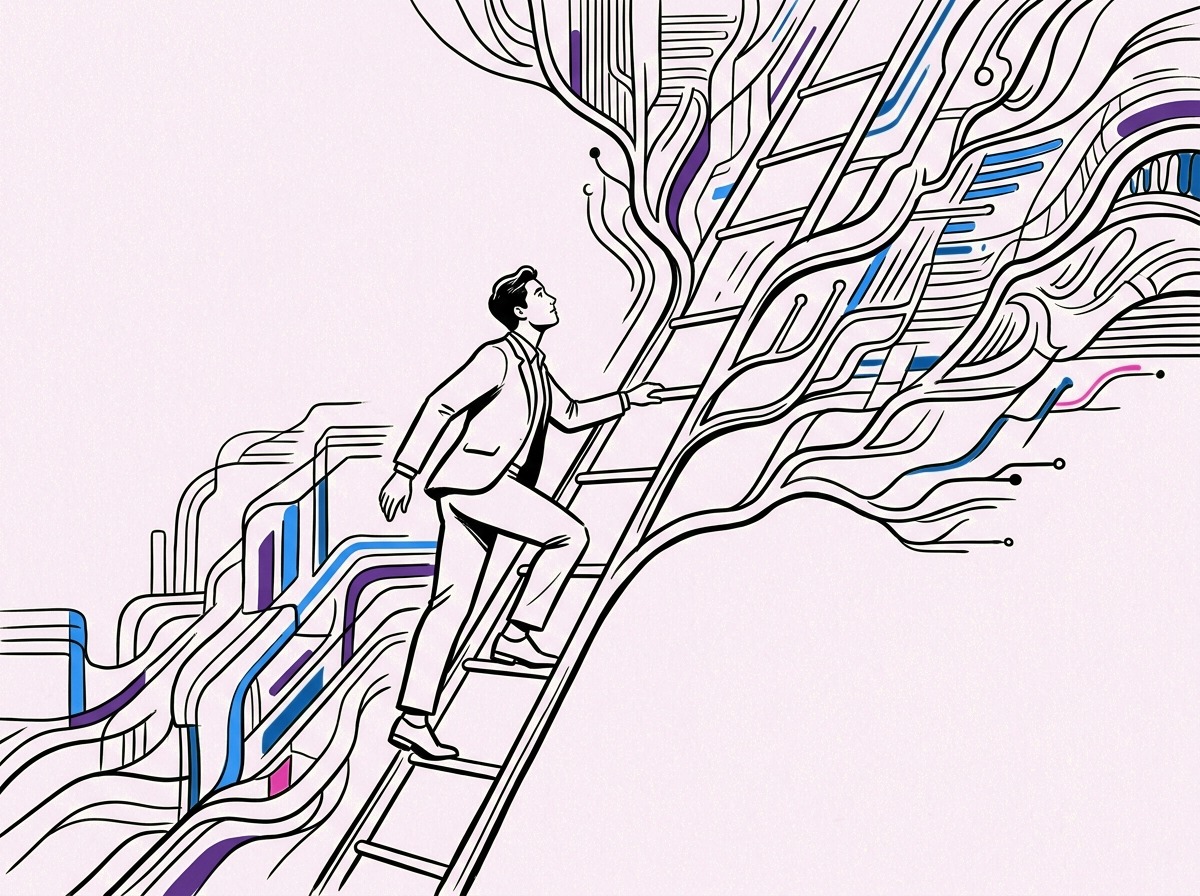
Factory electrification provides the exact historical parallel. Early plants replaced a steam engine with an electric motor and connected it to the same central drive shaft. Productivity barely moved. Decades later, plants were rebuilt around distributed electric power. Machines could be placed in the order the work required rather than near a shaft. The productivity gain came from redesign, not from the new motor alone.
An AI assistant bolted onto an unchanged process is the electric motor on the old shaft. It may make one step faster. It does not change the architecture. Redesign begins by asking which steps disappear, which can run together, which should move earlier, and where human judgment adds enough value to remain.
The redesigned workflow keeps a human in the loop at specific points rather than everywhere. The first point is specification. A person defines the goal, context, boundaries, and standard before AI begins. The second is review. A person judges what comes back before it moves downstream. Other checkpoints are added where the consequence of error demands them.
This structure is not a compliance ritual. It produces better work. Research on deskilling finds that AI can improve immediate output while the user's underlying capability erodes. The erosion is difficult to detect because the artifact looks better. Other interaction patterns prevent that loss. The difference is design.
Organizations producing stronger returns from AI invest more heavily in restructuring work than average adopters. That is the corporate version of the same lesson. Technology acquisition does not create integration. Work must be reorganized around the new capability.
A redesigned process may not function without AI, but it must still function under human control. The professional can explain why the task exists, what the system is allowed to decide, what evidence supports the result, and when a person must intervene. Dependence on capability is not surrender of accountability.
Without redesign, a professional gets a frustrating outcome. Adoption is real, satisfaction may be real, and the volume or quality of final work barely changes. They conclude the technology was overhyped. The evidence is accurate. It describes the old process, not the limit of the tool.
Would the workflow still run without AI? If yes, you adopted. You did not integrate.
Develop agent creation and coordination skills.
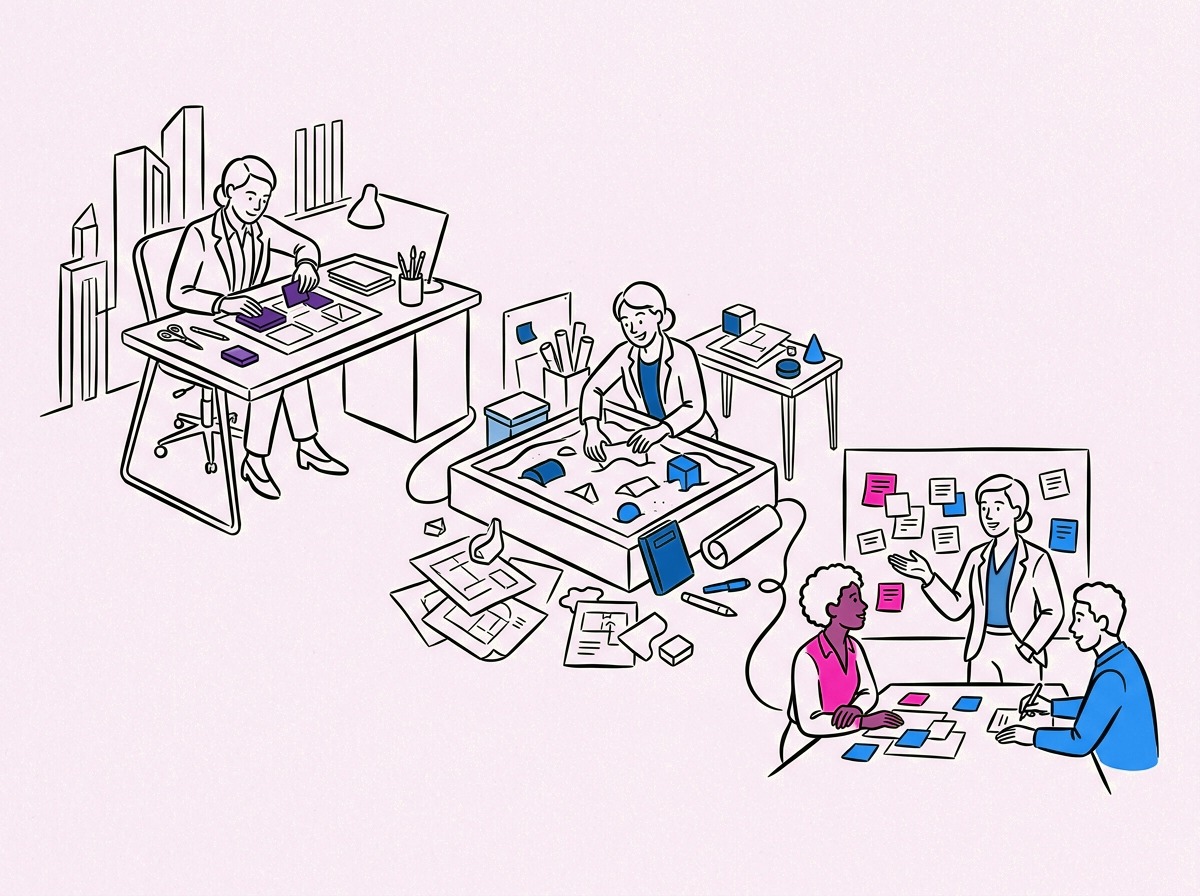
An agent carries work rather than answering a request. Building and directing one is a management skill before it is a technical skill. The essential acts are delegation, specification, review, exception handling, and accountability. Managers already know the shape of this work.
The transition resembles the move from individual contributor to first-time manager. Skill at doing the work earns the opportunity. It does not automatically produce skill at directing the work. The new role asks for clarity about outcomes, boundaries, resources, and quality. Prompting alone cannot carry that responsibility.
Begin with a job, not an impressive demonstration. Define the result the agent owns, what starts the work, what information it can use, what it may decide, and when it must stop. Define where the output goes next. If the result has no downstream use, the agent is producing activity rather than capacity.
That distinction is the honest caveat. Many agent systems create artifacts that a human rewrites, rechecks, or quietly ignores. They appear productive while adding supervision. This is not a reason to avoid agents. It is the reason to build them around work that can genuinely leave a person's queue.
Use one diagnostic. If this agent stopped running tonight and nobody told you, what would go undone tomorrow?
If the answer is nothing, the agent is a demonstration. If a report fails to reach a decision-maker, a record fails to update, a review queue stops moving, or a customer receives no next step, the agent holds real work. The professional can then measure reliability against an outcome rather than against the amount of content produced.
Coordination that once required meetings, reminders, and status collection can move into a system. Control stays with the person who defines exceptions and watches the right indicators. The dashboard does not remove management. It changes management from chasing information to acting on what needs judgment.
Badly built agents create the worst position in the progression. The professional supervises more and produces less. Well-built agents create capacity. A task leaves the queue, quality remains visible, and attention moves to work that requires a human.
Stop asking whether the agent is working. Ask what stops when it does.
Build safeguards as fast as capabilities.
A bad email may cost an apology. A deleted database can cost a company. Exposed financial, clinical, or employee information can do lasting harm. As AI gains access and agents gain authority, risk grows faster than visible capability.
The answer to more capability was never less capability. It was a discipline that made the capability survivable.
In 1935, the prototype that became the B-17 crashed during a demonstration flight. The aircraft was more capable and more complex than what pilots had flown before. The response was not to abandon the aircraft or simplify it until the advantage disappeared. Pilots developed a preflight checklist that made the complexity manageable. The B-17 went on to fly an extraordinary record without a similar accident.
Safeguards should rise with the level of access. An assistant working from public information needs verification and clear quality criteria. A workflow touching internal data needs approved systems, limited permissions, and traceability. An agent that can change records, send messages, or trigger another system needs stop conditions, monitoring, and a person who owns the outcome.
An agent can hold the work. It cannot hold the blame. Every delegation increases the accountability carried by the person who authorized it. That accountability should shape the design before access is granted, not after the first incident reveals the blast radius.
Build controls at the moment capability expands. Give the narrowest access needed. Separate drafting from sending. Require approval for irreversible actions. Preserve a record of inputs, decisions, and outputs. Test failure conditions with synthetic data. Decide who receives an alert and what they can do when one appears.
This is governance as professional discipline, not governance as paperwork. In regulated work, ambiguity is not a creative feature. The standard is knowing where information came from, what changed, who reviewed it, and what evidence supports the decision. Less regulated work benefits from the same clarity before the consequences force it.
Without safeguards, access expands through a series of reasonable small steps until the total exposure is something nobody would have approved as one decision. The first serious incident becomes the story leaders use to restrict AI for everyone. Capability stalls because trust was assigned before it was earned.
Build the safeguard at the same moment you grant the access.